Creating Digital Copies of the Sacred Places of Kazakhstan
Commissioned by the system integrator LANIT-Integration, United 3D Labs is creating digital copies of the sacred places of Kazakhstan.
In 2017, the Government of the Republic of Kazakhstan adopted the "Sacred Kazakhstan" program, one of whose goals is to preserve the cultural heritage and historical monuments on the territory of the republic. From the very start of the program, United 3D Labs has been taking part in this large-scale national project, creating digital copies of historical artifacts and structures.
The work of preserving cultural heritage in digital form consists of two stages: fieldwork and processing of the collected materials. Directly at the sites of the historical monuments, United 3D Labs specialists carry out laser scanning, photogrammetry and aerial photography and catalog the source materials. In most cases the expeditions take place in summer, but there are exceptions. At the Karakhan Mausoleum (Taraz), we had to work in December, when the temperature at times dropped to -28°C. Interestingly, despite the sub-zero temperatures and snowdrifts during the expedition, the digital copy of the Karakhan Mausoleum, like those of all the other sacred places, greets the viewer with warm summer sun and green grass.
At the second stage, the terabytes of material collected on the expeditions are processed in the studio. On powerful servers, tens of thousands of photogrammetry photographs are combined into unified photorealistic textures. The geometry of objects and structures is built from laser scanning data with millimeter accuracy. All of this is then assembled in real-time 3D visualization systems (in most cases Unreal and Unity) to obtain an absolutely realistic copy of the historical monument.
The digital twins are then used in three ways:
-
on the "Sacred Map of Kazakhstan" website, which hosts 360-degree panoramas and simplified 3D models of the sites. In this case the visualization quality is somewhat reduced, but anyone on the planet with Internet access can get to know the culture of Kazakhstan;
-
as a computer application, a solution intended primarily for schools;
-
and, finally, as a virtual tour for VR headsets.
The last option, combined with the photorealistic quality of the digital copies of the sacred places, is designed for museums and research institutes and allows the user to literally travel through space and see the unique historical monuments with their own eyes.
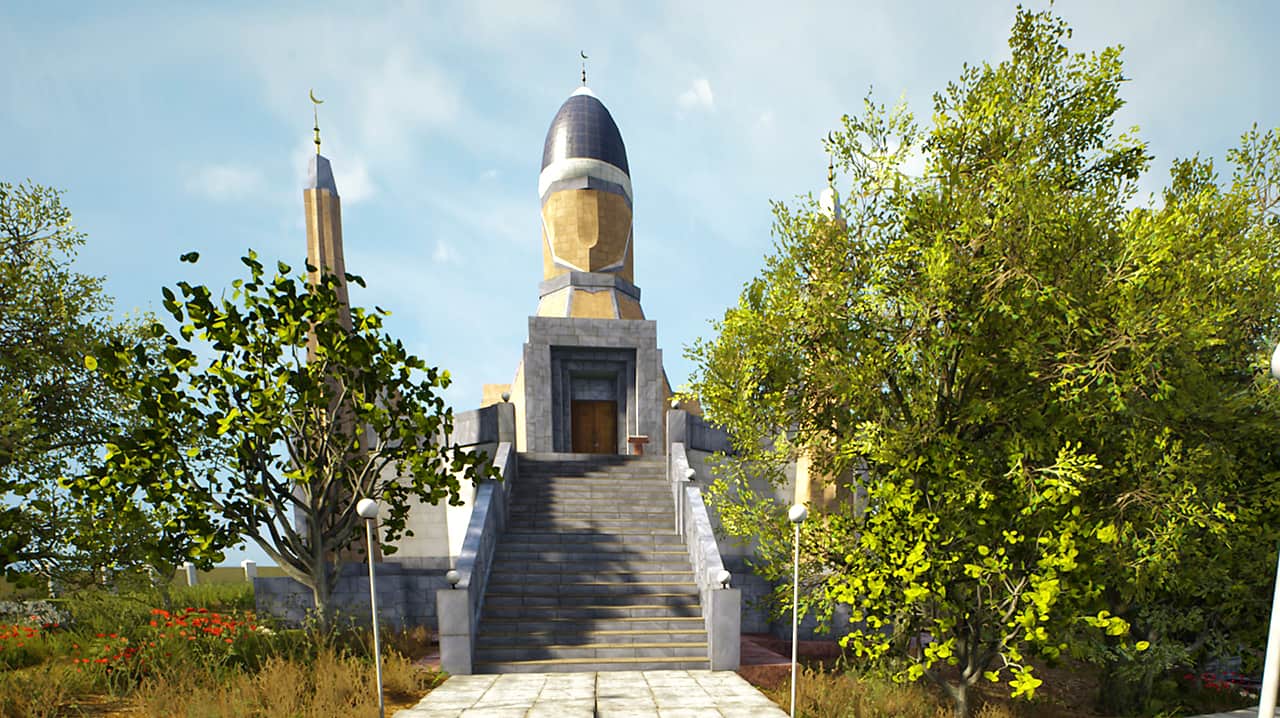
Baba Tukty Shashti Aziz Masoleum.
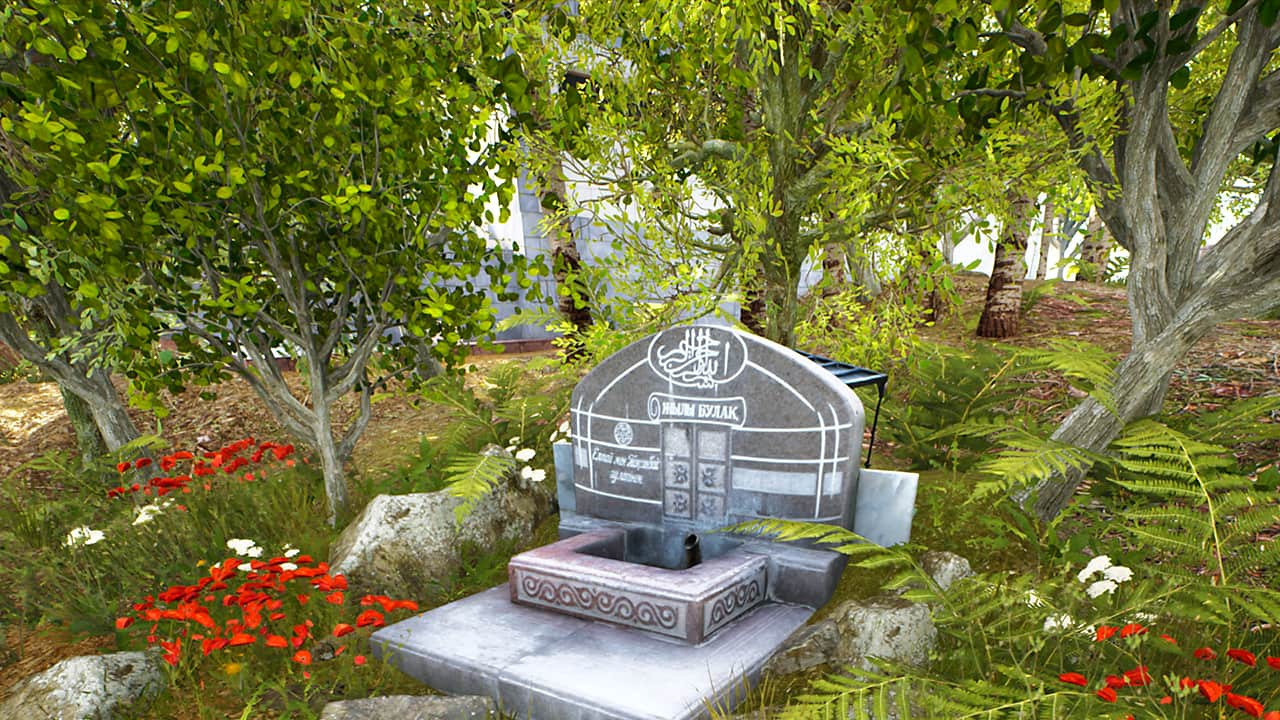
Using the data acquired in the process of laser scanning, we recreate items, artifacts and architectural structures are recreated with millimeter accuracy.
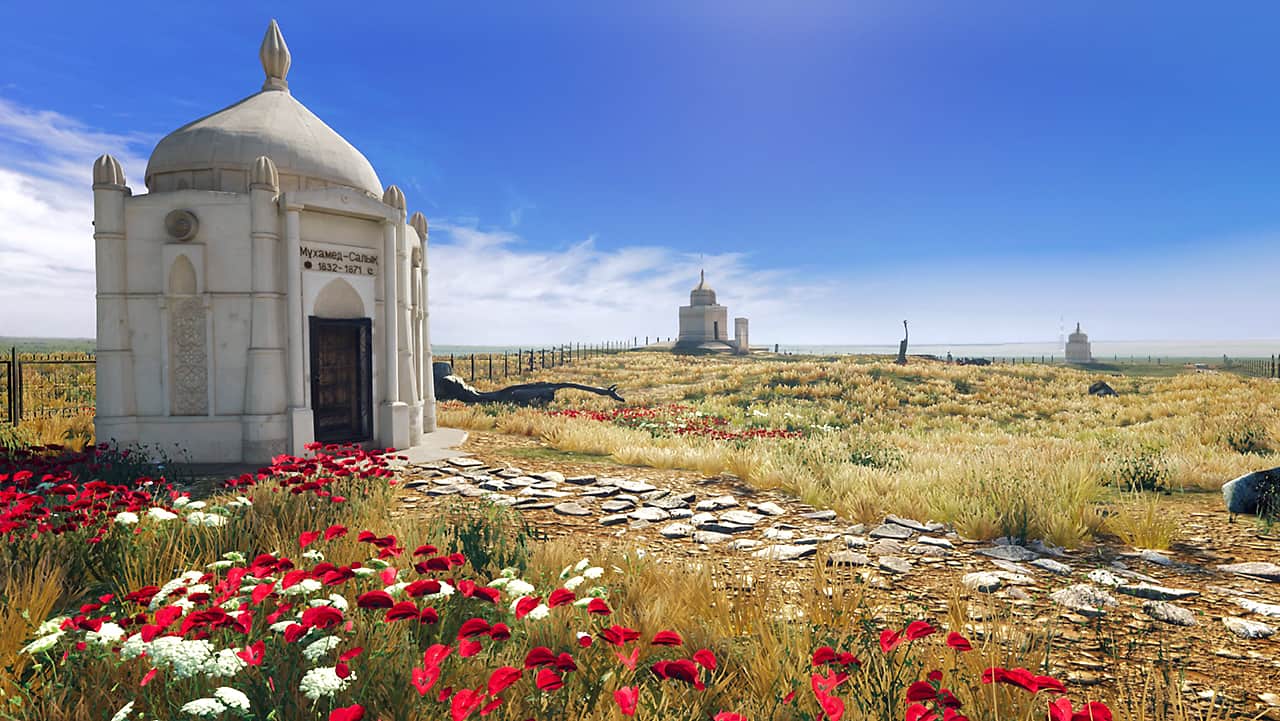
The Bukey Horde historical complex in virtual reality.
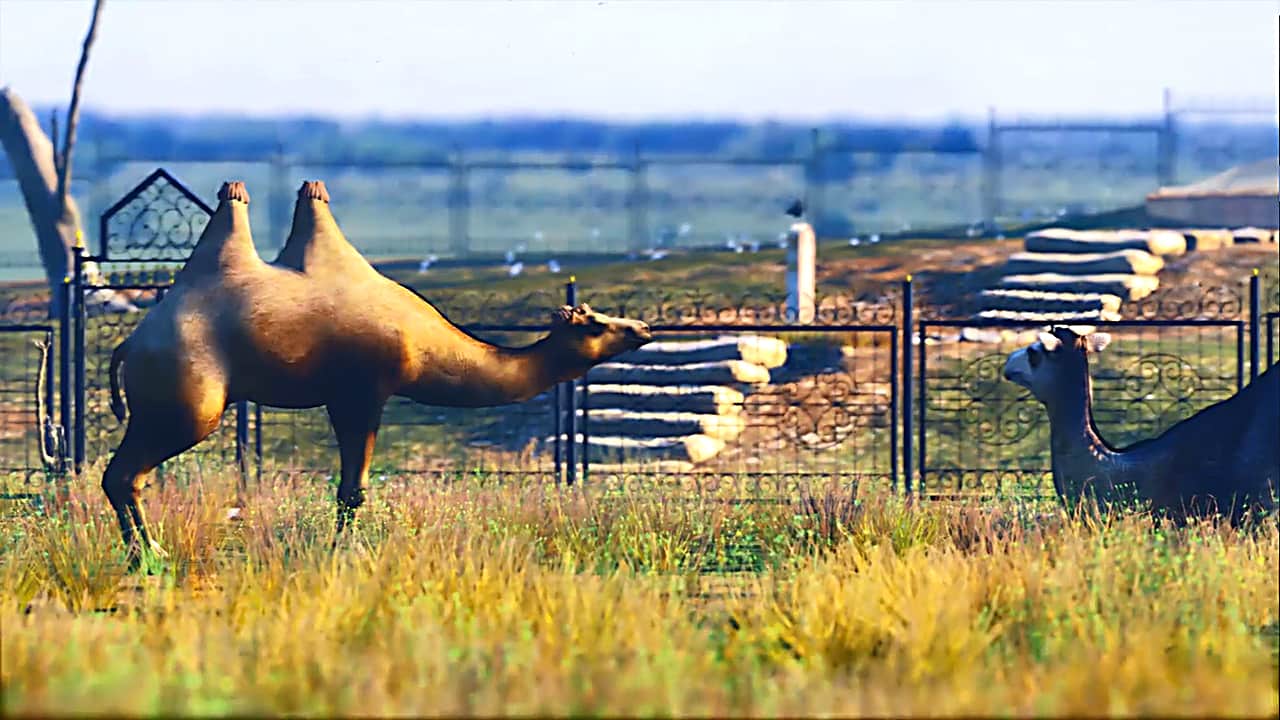
Camels resting near the Bukey Horde complex.